
Five Questions with Nina Oyama
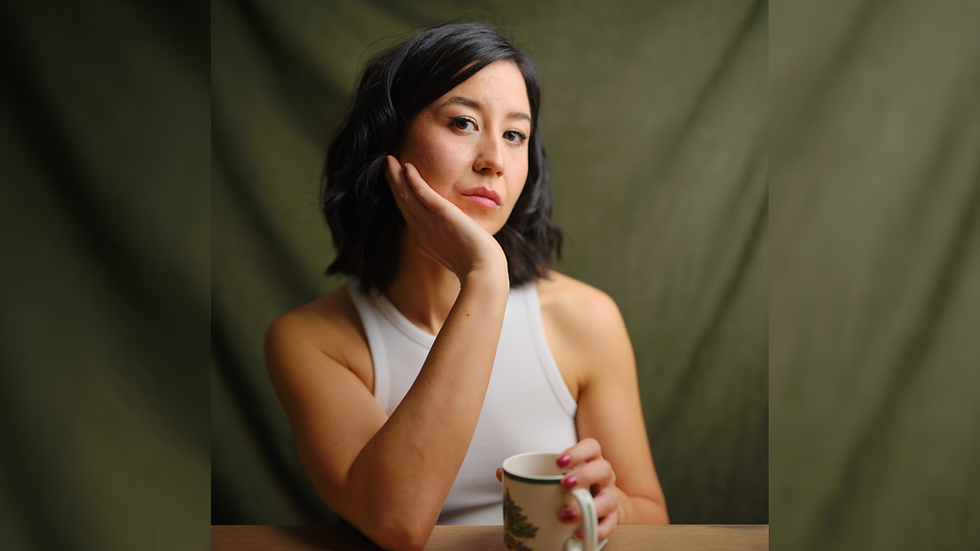
Q1. What has been your best career move so far?
I wouldn’t say I’ve had a lot of deliberate career moves. As an actor, writer and director, you’re almost entirely at the mercy of the entertainment gods. Most work is chosen for you by a higher up, whether it’s a casting director, or an agent or a producer. Yes, you can hustle, and you can apply for things and network. But ultimately, a bunch of this stuff is luck, and throwing shit at the wall and seeing what sticks.
The smartest thing I’ve ever done is learn how to apply for grants. And because I am either a nerd or a sicko, I love the grant application process. I love the way funding applications force you to interrogate your work from different angles. Unlike lots of creatives, I have never had financial help from my parents. Without the grant system, I would never have had any of my own projects made and I would never have become a director. The projects I was able to make through the grant system [The Angus Project for ABC, Latecomers for SBS] were well received, and inevitably led to more work. For that, I am extremely grateful.
Q2. Looking back, what would you do differently?
After being a struggling writer/comedian for my entire adult life, in my late 20s I finally booked a TV show which paid me fairly well. I just assumed that I would never have any money, because I didn’t for so long, and then when I got it, I had no idea how to be smart about it. If I could go back in time, I would have consulted with an accountant on what to do with the money. I now know I should have put it in a high-interest savings account or bought an apartment - or something that would have served my future a little better.
For what it’s worth, I did eventually figure out my finances - I have a great accountant now. But they really had to whoop my ass at the beginning.
Q3. What’s the best advice you’ve received?
This is a very screenwriting tip, but “figure out your TV show’s eternal question”. When we were writing Latecomers, our script editor Vanessa Alexander - who wrote on The Great - implored us to discuss the TV show’s eternal question. What is the one question that every character asks every episode, which can be answered in a million different ways?
For Transparent, the question is “will you still love me if?” and each character is testing the boundaries of unconditional love.
For The White Lotus, “how far will you go to run away from the truth?” Each character is on holiday, so they are already running from the perils of their regular day to day. But what they are running from and the ways they try to hide, can create an infinite amount of character-driven stories.
When you boil it down, the eternal question is what your show is trying to explore about the world and humanity.
Q4. Do you have a professional hero?
I have two! Kate McLennan and Kate McCartney - the creators of Deadloch. They are just so unapologetically funny and brash, and they’ve made an incredible show, which they have had to fight tooth and nail for. They are living proof that you can make a comedy show that has a social conscience, and that there is an appetite for it. Also they are just generally lovely people.
Q5. Have things improved for women across the entertainment industry?
I’m going to speak strictly to stand-up comedy because that was my first foray into the industry. When I started performing stand up in 2011, I was 17 years old. There was only ever one woman on any line up, to the point where we were almost all siloed. I don’t think I had any female comedian friends, and even if I did, I sort of saw them as my nemeses.
It’s going to sound crazy but female friendship only became culturally fashionable in about 2015 - Broad City was huge, Taylor Swift was parading around her girl squad on the 1989 world tour. There was a tangible shift - more women started doing stand up and comedy line ups started booking more than one woman. It was awesome.
I feel like now in 2026, the industry is a lot more egalitarian, with comedians outside of the traditional white male mould able to find their audiences through TikToks and Instagram reels. I don’t think it’s perfect. There’s still plenty of male comedians trading on misogynist material. There’s still weird creeps lurking around the corners in clubs. There’s a whole bunch of trolls telling us “women aren’t funny” in the comments. But since 2011, it’s come a long way.
Nina Oyama is an award-winning writer, director, actress and comedian, best known for playing Abby on Deadloch, Courtney on Utopia and herself on Taskmaster Australia. Nina’s TV writing credits include You’re Skitting Me (ABC), Love Me (Binge), Yolo Crystal Fantasy (Adult Swim) and Class of 07 (Amazon). In 2023, her episode of Koala Man (Disney Plus) won the AWGIE for Adult Animation. Nina also co- created the AACTA Award winning SBS series Latecomers, which screened in competition at Series Mania, and was subsequently broadcast internationally. Nina is ADG and AACTA nominated for her directing work on half hour comedy pilots The Angus Project and Urvi Went to An All Girls School - which were both funded by ABC’s Fresh Blood Initiative. In 2026, she made her animated feature film debut, voicing Pip in The Pout Pout Fish, alongside Nick Offerman, Amy Sedaris and Jordin Sparks.
Nina is a queer, mixed race, Australian/Japanese woman who grew up feeling like an outsider in her hometown of Sydney, Australia. She specialises in creating funny, subversive work which brings minority experiences to the forefront, with offbeat humour and dumb jokes.


