Five Questions with Miriam Corowa

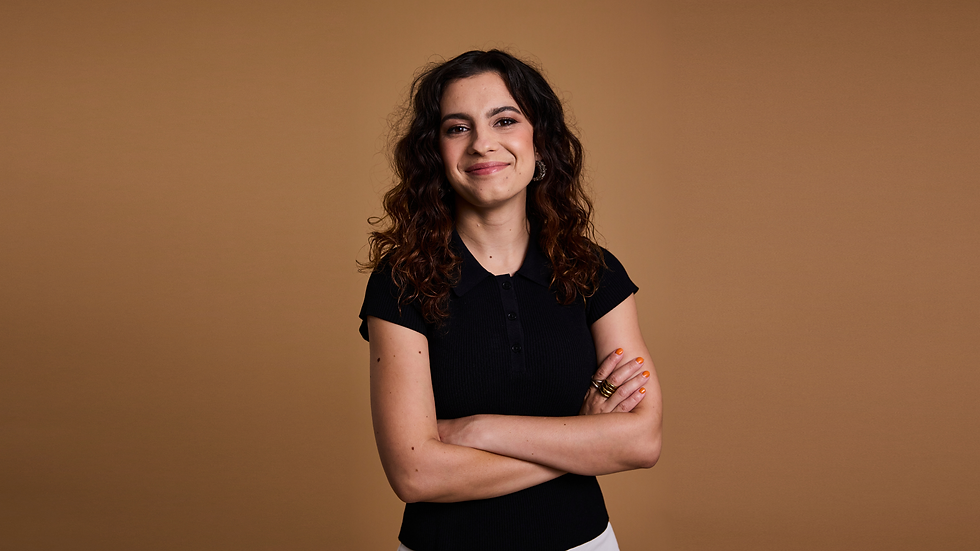
Miriam Corowa is the Senior Cultural Advisor for ABC News. She is a broadcaster, reporter, presenter and producer who has worked in the media since 2000 and has worked at both the Special Broadcasting Service and the Australian Broadcasting Corporation across programmes such as World News Australia, Message Stick and the ABC’s News Channel. She commenced in the role of Senior Cultural Advisor, ABC News in February 2024, providing editorial and cultural guidance to reporting teams and shares in the development of strategies and engagement for the network.
Miriam is a Bundjalung woman, calling the far north coast of New South Wales home.
Q1. What’s the best part of your job?
Being at the centre of history in the making when you’re working with a team pulling together to share an important moment with the nation and feeling the thrill of everyone contributing so much energy, skill, generosity and passion. Breaking news is hard to go past for the sheer adrenaline and split-second precision that’s being carried by a team of tens, if not hundreds of people.
Q2. What moment or achievement are you most proud of?
I’m most proud of transitioning my career into being a working Mum. Motherhood marked such a profound shift for me in my approach to work and life in general. Instead of trying to be perfect, I only had time to strive for ‘good enough’. I became much more efficient, much more accepting of myself, much more ‘in the moment’. The power of having more perspective about what matters, how to get the best out of myself and others and bring my whole self to what I do has been enormously rewarding and for which I am extremely grateful.
Q3. What’s the best advice you’ve received?
I don’t have to be responsible for someone else’s understanding of an entire population. This advice, and so much more, I owe to some very wise women I am fortunate to work alongside who have shared a similar career journey to me. As a First Nations journalist and presenter, being relied on to answer all manner of questions about Indigenous issues is a familiar situation. There is a line that I felt I walked in wanting to make a difference as someone of my lived experience working in the media. With so few of us in the industry, it felt vital to always fill gaps in knowledge or help someone overcome a hesitancy to learn more about First Nations history, culture and issues. So, I would always try to take on a role of being available to answer anything raised by colleagues. But I’ve also come to realise this can create a reliance on one person, or maybe a few, to constantly be available and have an answer. At times, this became an invisible load added to an already busy job. What I’ve come to appreciate, especially now that I have a role dedicated to supporting understanding of Indigenous Australians in broadcast journalism, is that this search for knowledge needs be something the inquirer also invests their own time in researching. My purpose is to help guide that.
I’ve also become more comfortable saying ‘I don’t know’ when the question or conversation steers to something outside my lived experience and pointing out that we have a rich diversity of First Nations cultures, languages, histories and approaches which rightfully belong to their community. Now that I work as Senior Cultural Advisor for the ABC, it’s been a learning curve to understand how I can facilitate understanding rather than trying to be a font of knowledge for fellow staff.
Q4. What’s something you wish you knew when you were starting out in media?
Don’t let fear of making a mistake stop you from trying something that challenges you. Focus on the gift of learning. Those who get the most out of their careers [and indeed are the ones I’ve most enjoyed working with and aspired to emulate] are the people who stay curious, keep expanding their knowledge and are always looking for opportunities to learn more.
Q5. What do you think the media industry will look like in ten years?
Ten years! How about 12 months? This is the question of the moment, and not just for media, as we are now on the precipice of everything we currently know being morphed into who knows what thanks to the ultimate disrupter, AI. All I can say is that staking out the territory between human-led and AI-generated content will be incredibly challenging but vital. Having clear delineation between what skills we prioritise for staff to deliver news that remains grounded in accuracy, impartiality and in the public interest is the goal. Making sure we can adapt to leverage the algorithm and continue to reach our audiences will be the ultimate test. Striving to achieve all this will be transformative.